

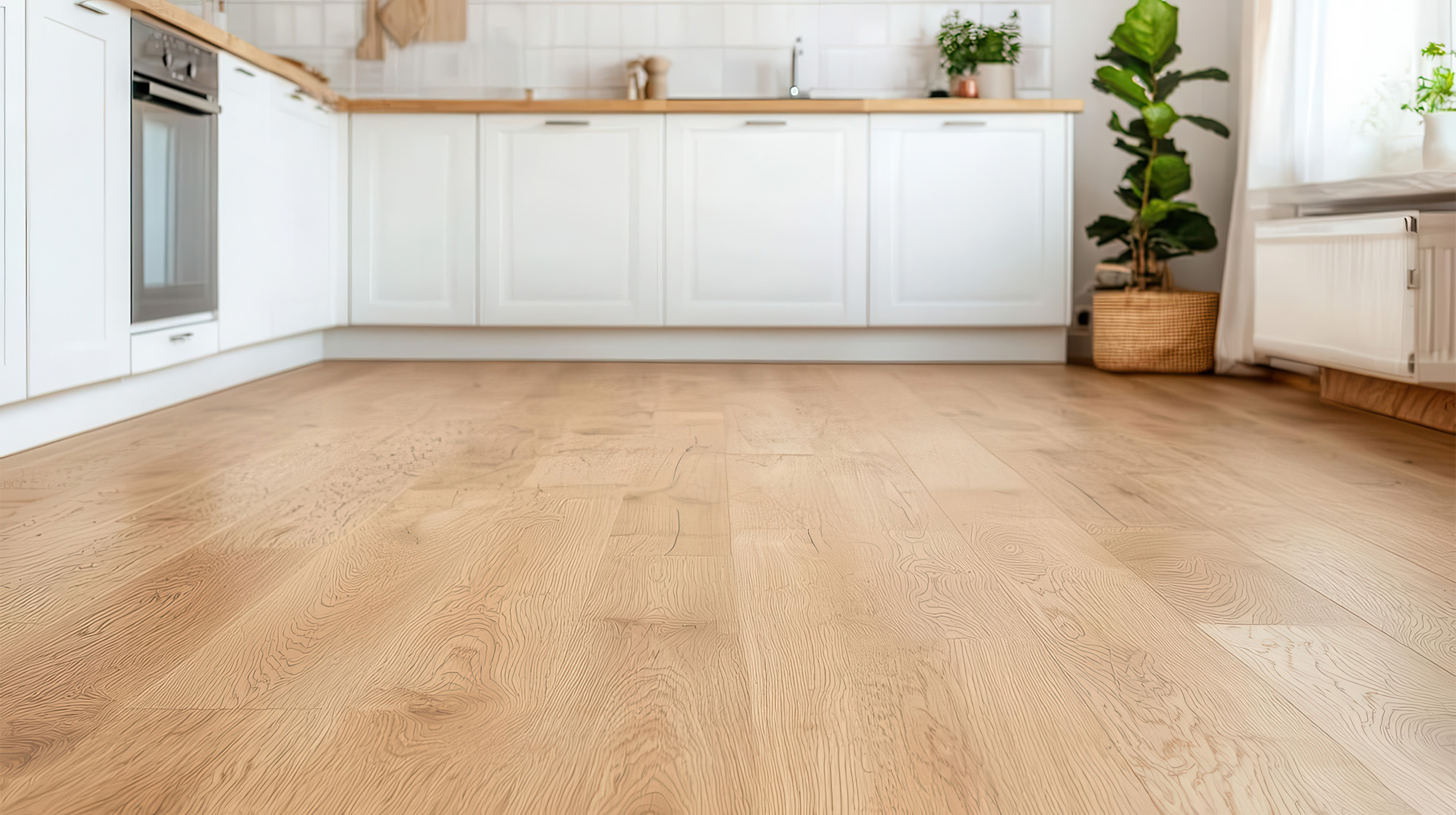
Laminate flooring has become a versatile design option for homeowners who want the appearance of wood or other natural materials with practical everyday performance. Yet color and plank pattern are only part of the decision. The surface finish, whether matte, satin, smooth, embossed, or deeply textured, affects how the floor responds to light and how it fits with the room’s furnishings.
For Bellevue and greater Seattle interiors, this decision is especially important. Natural light can shift throughout the day and across the seasons, changing the way sheen, texture, and color appear. The best laminate finish should look attractive in bright summer light, overcast daytime conditions, and warm evening illumination.
What Is a Laminate Flooring Finish?
The finish describes the visible and tactile character of the flooring surface. It influences how much light the plank reflects and how closely the design resembles wood, stone, or another material.
A matte finish has limited shine and creates an understated appearance. Satin offers slightly more reflection, giving the floor a soft glow rather than a glossy look. Textured laminate includes physical surface variation, which may follow the printed grain pattern to create a more convincing wood-inspired effect.
These distinctions can feel subtle when looking at a small sample. Across an entire room, however, the finish has a significant influence on the overall atmosphere.
When Should You Choose a Matte Finish?
Matte laminate is a strong option for relaxed contemporary interiors. Because it reflects less light, it tends to create a calm, grounded foundation beneath furniture and architectural features.
This finish works especially well in open living areas where the flooring should connect multiple zones without becoming the dominant visual feature. It also complements natural materials such as wood cabinetry, stone, linen, leather, and matte-painted walls.
A matte surface can be useful in rooms with broad windows or bright overhead lighting because it reduces strong reflections. It may also make light dust, footprints, and minor surface marks less noticeable than a highly reflective floor, although actual performance varies by product.
Choose matte laminate when you want the floor to support the design quietly rather than create a polished focal point.
When Is Satin Laminate the Better Choice?
Satin laminate sits between matte and high-gloss finishes. It reflects enough light to give the surface definition, but it does not usually create a mirror-like shine.
This makes satin an adaptable option for transitional interiors that combine traditional and modern features. It can work with shaker-style cabinetry, simple millwork, contemporary lighting, and a mixture of classic and streamlined furniture.
In rooms with limited natural light, satin may help the floor feel brighter. However, the effect should be evaluated with samples because darker colors and pronounced grain patterns can still absorb visual light even when the surface has a slight sheen.
A satin finish is often a good middle ground for homeowners who find matte too subdued but do not want the maintenance concerns associated with a highly reflective surface.
How Does Textured Laminate Change a Room?
Textured laminate adds tactile depth. Some products use subtle surface variation, while others feature more pronounced embossing intended to coordinate with the printed wood grain.
Texture can make a wood-look design feel more natural, particularly across larger rooms where repeated plank imagery might otherwise become more noticeable. It also introduces shadow and tonal variation when light moves across the floor.
A stronger texture may require a little more attention during cleaning because dust can settle within surface variation. Follow the product manufacturer’s instructions and use cleaning tools appropriate for that specific floor.
Textured laminate works particularly well in family rooms, casual living spaces, and interiors influenced by Pacific Northwest materials. It can complement exposed beams, natural textiles, stone fireplaces, and simple wood furnishings without requiring actual hardwood in every room.
Consider the Direction and Quality of Natural Light
Do not select laminate under showroom lighting alone. Bring samples into the home and view them beside windows, walls, cabinetry, and adjoining floors.
In a south- or west-facing room, stronger afternoon light may make satin finishes appear shinier and warm tones more pronounced. In a north-facing room, the same sample may look cooler and more subdued. During Seattle’s darker months, artificial lighting can introduce additional yellow or blue undertones.
Place several full-size samples together rather than judging one narrow plank. This provides a better sense of pattern repetition, color variation, and sheen across a larger area.
Match the Finish to the Room’s Use
In a busy household, appearance should be balanced with realistic maintenance expectations. Matte and lightly textured finishes may disguise routine dust and minor marks, while smoother satin surfaces can be straightforward to wipe clean. Performance still depends on the individual product, wear layer, and manufacturer specifications.
For a kitchen, mudroom, or entry-adjacent area, review water-resistance claims and installation requirements carefully. “Water-resistant” and “waterproof” are not automatically interchangeable terms. Confirm what the warranty covers, how spills should be handled, and whether special perimeter sealing is required.
Also examine the flooring from standing height. A finish that looks highly detailed when held close may appear completely different once installed beneath furniture and viewed from across the room.
Coordinate Laminate with the Rest of the Interior
The flooring does not need to match every wood tone in the room. In fact, a room often feels more established when it includes several related tones rather than one exact color repeated everywhere.
Look for a shared undertone. Warm laminate can coordinate with walnut, cream, brass, and earthy fabrics. Cooler flooring may pair well with charcoal, white oak, black metal, and blue-gray textiles. If the floor has pronounced grain, consider simpler cabinetry and upholstery. If the floor is quiet and uniform, furniture and rugs can carry more pattern.
Associated Incorporated offers laminate flooring among its curated residential products, along with design assistance and professional installation for Seattle-area projects. The company’s flooring services are supported by more than 47 years of industry experience.
Choose a Laminate Finish That Fits Your Bellevue Home
The best laminate finish is one that works with the room’s light, traffic level, furniture, and maintenance needs. Compare matte, satin, and textured samples in the actual space before making a final selection, and evaluate them at different times of day. A careful choice will give your Bellevue interior a practical and cohesive foundation.


